June 21, 1988
The Buried Ship
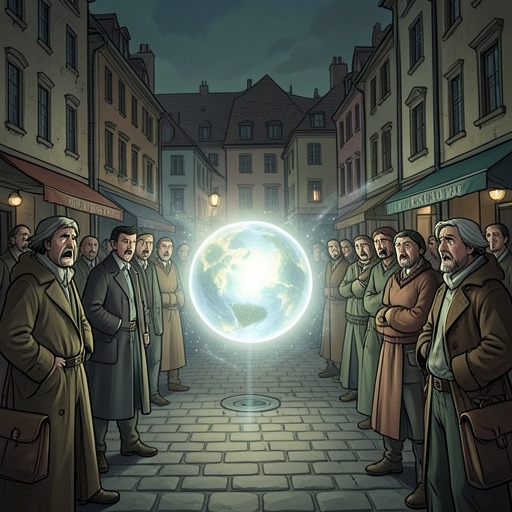
Roberta "Bobby" Anderson discovered a dark gray metal protruding from the ground on her own land in [Haven, Maine](entity:location-recall-location-haven-maine-878ab54ac731). Her old rabbit hunting dog Peter retreated in fear, but Bobby felt an odd vibration; when she dug around the thing, time seemed to disappear. The curved metal exposed made
The night of June 21, 1988
Peter’s Warning
After coming home, Bobby's mind was full of the metal buried underground. She imagined a corpse lying in a metal coffin, then dreamed of a green light and her teeth falling out one by one. Peter screamed in his sleep, shivering, as if sensing something in the forest. Bobby blamed her
June 24–25, 1988
The First Dig
After several days of rain, Bobby returned to the forest, digging for several hours in a daze, uncovering a large area of smooth, unmarked ship body. She found that this metal could not be scratched, and estimated the circumference of the object to be hundreds of yards. The digging left
June 25–27, 1988
Peter’s Rejuvenation
Bobby found that Peter's cataract was shrinking, and his aging body seemed to be getting younger. At the veterinary clinic, when Peter's eyes began to glow green, the animals suddenly became restless; Bobby took him out before the situation worsened. In a stormy thunderstorm, the
June 26–July 4, 1988
Gardener’s Binge
During Bobby's excavation, James Eric Gardner relapsed into his old addiction during a poetry tour. He was addicted to alcohol, causing chaos at parties, and lost several days of memory due to drunken episodes. He had shot his wife Nora with a gun while drunk, and later served time for holding a
July 4, 1988
The Tommyknocker Rhyme
On the beach, Gardner met a boy named Jack; the boy knew a version of the [Tommyknockers](entity:character-recall-character-tommyknockers-dc41c1fd49cb) song. This encounter, combined with Gardner's repeated certainty that Bobby was in danger, turned the song into an ominous chant
July 4, 1988
Gardener Reaches Haven
At dusk, Gardner arrived at Bobby's farm and found her emaciated, dirty, and almost incoherent. She insisted she was fine, and then collapsed into his arms. He wanted to call a doctor, but she threatened that if he did so, their friendship would end. Gardner agreed
July 5, 1988
The Dream Machine
Gardner found a tiny but glaring sun in Bobby's modified water heater, surrounded by batteries and circuits. He also discovered that the old Underwood typewriter in the kitchen could type out Bobby's thoughts at an astonishing speed. The typewriter claimed to be a dream device, answering Gardner's private
July 5, 1988
The Ship Is Revealed
Bobby led Gardner to the forest and showed him the huge disk-shaped ship she had dug up. He touched the hull, and immediately strong, unbearable music echoed through his skull; then he started bleeding from his nose severely, but his headache suddenly disappeared
The evening of July 5, 1988
Gardener Chooses Bobbi
Gardner weighed whether the ship could provide clean and sufficient energy, and what dangers would result from giving such powerful force to the government and military institutions. He realized he was also tempted by the power he held, yet he was equally afraid of what he and Bobby might do with it. He decided
Historical background, from 1813 to 1901
Haven’s Hidden History
Hawen has been renamed several times, from Monte Verde Plantation to Kudessville, Montgomery, and finally to Elym. Local history includes the wealth of timber, the revival preachers who exploited the town for profit, and the murder of an infant and its parents following a scandal
Early July 1988
Haven Begins to Change
During Bobby's excavation, the townspeople began to have headaches, lose time, have strange dreams, and their physical strength was renewed, with sudden bursts of innovative inspiration. Their thoughts began to merge, while their teeth loosened or fell out, and their tempers became more irritable
July 7, 1988
’Becka Hears Jesus
Rebecca "Beka" Paulson heard the image of [Jesus](entity:character-recall-character-4e427eab6364) on television speaking to her, telling her that her husband Joe was having an affair with the post office clerk Nancy Wors. The image continually revealed the secrets of the townspeople, and "Beka" had difficulty determining whether the voice
July 10, 1988
Joe and ’Becka Die
When he returned home, he was thinking all along about his extramarital affair and his recent good luck in gambling. He turned on the television secretly modified by "Beka," and the device immediately released a fatal electric current to him
July 17, 1988
Hilly’s Second Magic Show
At the age of ten, [Hilly Brown](entity:character-recall-character-hilly-brown-310a577f590a) has extraordinary intelligence but always performs poorly. He uses the new invention inspiration to create a device that can make objects disappear and reappear. In a performance in the backyard with few spectators, family members and neighbors just watched coldly, showing no surprise. H
July 17–20, 1988
The Search for David
[Ruth McCausland](entity:character-recall-character-ruth-mccausland-7f544ce874ee) organizes a search for David, though she and the others in [Haven](entity:location-recall-location-haven-cdfff42acfaa)’s shared mind know that he is not simply lost in the woods. The town performs the search anyway, acting out what the novel calls the “dance of untruth” and insisting that events remain ordinary.
Ruth tries to resist the collective influence and protect the boy. Her efforts expose her to mounting hostility from the town, while her judgment is impaired by the same force that has captured her neighbors.
Late July 1988
Ruth’s Dolls Reveal the Truth
Ruth’s doll collection begins to speak in the voices of the townspeople. They tell her that David is on [Altair-4](entity:location-recall-location-altair-4-ffca9c9b0a99) and urge her to send a signal from the town hall. Ruth understands that the dolls embody the town’s collective madness, but also its last remaining resistance to the alien influence.
She builds small battery-powered devices, hides them inside the dolls, and wires them together with a firecracker. Her plan is to use the town-hall clock tower as a transmitter, even as the compulsion to destroy [Haven](entity:location-recall-location-haven-cdfff42acfaa) grows within her.
Late July 1988
Ruth’s Escape Fails
Ruth tries to leave [Haven](entity:location-recall-location-haven-cdfff42acfaa) but encounters an invisible barrier at the town line. The barrier pushes her back, while the voices of the townspeople insist that they love her and want her to stay.
She realizes that Haven has become a closed system and that she herself is being changed. Her failed escape confirms that the town’s collective force can physically prevent some people from leaving.
July 24, 1988, 3:05 P.M.
Ruth’s Clock-Tower Signal
Ruth climbs into the town-hall tower with the wired dolls, intending to detonate the signal device when the clock strikes. Bats swarm her, and she falls through the trapdoor as the explosive finally goes off.
The tower blasts into the sky in a pillar of green fire, then explodes. The destruction damages the village but causes no other casualties. Gardener sees the tower rise from Bobbi’s porch and lies to Bobbi about what he witnessed, recognizing that the town is concealing something dangerous.
July 24, 1988, evening
The Clock-Tower Cover Story
[Haven](entity:location-recall-location-haven-cdfff42acfaa)’s residents construct a projection device using a photograph of the town hall, intending to conceal the missing tower from outsiders. Their makeshift technology can create a convincing image, but the photograph’s clock face shows the wrong time and forces them to alter it.
The townspeople coordinate through their shared mind, revealing both their growing technical powers and their determination to prevent outsiders from discovering the scale of the transformation.
July 24, 1988, evening
The State Troopers Disappear
Troopers [Benton Rhodes](entity:character-recall-character-18ef1246dc7b) and Peter Gabbons investigate the tower explosion and encounter strange dismembered dolls, dead bats, and a single severed human arm belonging to Ruth. The townspeople behave as if nothing unusual has happened, and the troopers begin to suspect a cover-up.
[Beach Jernigan](entity:character-recall-character-beach-jernigan-e12977f47efd) ambushes them on the road with a green-ray weapon built from batteries and salvaged parts. The troopers vanish, leaving behind their cruiser and a staged scene intended to suggest that deer poachers attacked them.
July 25–26, 1988
Ev Connects the Clues
[Ev Hillman](entity:character-recall-character-ev-hillman-7645ec03ac4d), staying near his comatose grandson Hilly in [Derry](entity:location-recall-location-derry-d46e7068265a), reads news of Ruth’s death and the missing troopers. He remembers the old stories about [Big Injun Woods](entity:location-recall-location-big-injun-woods-36ac17e9be49), the deaths and disappearances near the woods, and the earlier changes in [Frank Garrick](entity:character-recall-character-frank-garrick-fa5964fc2bdd).
Ev concludes that Bobbi has uncovered something in the woods and that it is affecting [Haven](entity:location-recall-location-haven-cdfff42acfaa). He approaches [Butch Dugan](entity:character-recall-character-butch-dugan-02a1e107eeea), warns him that the town is dangerous, and arranges to return during Ruth’s funeral with a flare gun and specialized breathing equipment.
July 27, 1988
Ev and Dugan Enter Haven
Ev and Dugan take back roads around [Haven](entity:location-recall-location-haven-cdfff42acfaa) and enter from the [Albion](entity:location-recall-location-albion-49f8d9c31b96) side during Ruth’s funeral. Dugan rapidly becomes sick and disoriented, while Ev remains largely unaffected, apparently protected by the metal plates in his skull.
Ev tests whether Dugan can hear his thoughts and discovers that Dugan can. They reach the excavation and see the enormous spacecraft. Ev photographs it, but the ship’s influence grows stronger and the Havenites arrive to prevent the outsiders from leaving.
Early August 1988
Gardener’s Daylight Encounter
The ship’s influence worsens as the excavation reaches the underground water table. [Freeman Moss](entity:character-recall-character-freeman-moss-0dc6a0e08c83) helps Gardener move heavy pumping equipment with a remote-control device that makes the machinery float, but the effort consumes huge quantities of batteries.
Gardener increasingly suspects that the ship’s power is damaging [Haven](entity:location-recall-location-haven-cdfff42acfaa)’s ecosystem and its people. He considers fleeing or destroying the ship, but remains, hoping he can still prevent the transformation from becoming irreversible.
August 7, 1988
Bobbi Returns from the Shed
Bobbi reappears after spending time in [the shed](entity:location-recall-location-bobbi-0d6b020873c5), visibly changed and using makeup to conceal her altered skin. She and Gardener resume work, but their intimacy has become strained and his distrust has deepened.
Bobbi says the final stage is close and presses him to continue. Gardener recognizes that she is no longer simply the woman who found the ship, yet he agrees to keep working while searching for a way to stop the process.
July 27, 1988
Ruth’s Funeral
Outsiders gather in [Haven](entity:location-recall-location-haven-cdfff42acfaa) for Ruth’s funeral while the townspeople use a projected image to conceal the destroyed clock tower. The ceremony becomes a carefully staged performance, and the visitors experience headaches, nausea, and sudden ideas as they remain inside the town’s influence.
Ev and Dugan use the funeral as cover to enter Haven, but their expedition ends at the excavation and [the shed](entity:location-recall-location-bobbi-0d6b020873c5). The funeral thus becomes both a memorial to Ruth and a mask for the community’s attempt to hide its transformation.
August 8, 1988
Newt’s Physical Changes
[Newt Berringer](entity:character-recall-character-3ab896f55e8e) tries to cover his increasingly transparent skin with his late wife’s makeup. The changes have progressed beyond tooth loss: his face is becoming translucent, and a tentacle begins to emerge from his clothing.
The [Shed People](entity:character-recall-character-2a35d6f05250) conceal their mutations and continue to believe that the transformation is worth the cost. Newt’s body makes plain that the “becoming” is not a metaphor but a profound alteration of human anatomy.
August 8–9, 1988
The Battery Run
[Tommy Jacklin](entity:character-recall-character-tommy-jacklin-223bcd0d28db) and [Hester Brookline](entity:character-recall-character-hester-brookline-9757ed9c2b33) drive outside [Haven](entity:location-recall-location-haven-cdfff42acfaa) to buy batteries, but the air beyond the town becomes increasingly hostile to them. They return sick, bleeding, and nearly blind; Tommy dies, while Hester survives but loses her sight.
Their injuries expose the danger of crossing the boundary and the town’s reliance on increasingly large supplies of batteries. The residents have created extraordinary devices but remain dependent on fragile, improvised systems.
August 10, 1988
Peter in the Shed
After hearing Bobbi sneeze and noticing dog hairs and green residue on her dress, Gardener realizes that she has lied about Peter’s death. He finds Peter, Ev, and [Anne](entity:character-recall-character-anne-8255533dffd4) suspended in green liquid inside [the shed](entity:location-recall-location-bobbi-0d6b020873c5), connected to a transformer by cables inserted into their brains.
The three are being used as living power sources, their minds and bodies harvested to sustain the technology of the [Shed People](entity:character-recall-character-2a35d6f05250). Ev communicates that David remains on [Altair-4](entity:location-recall-location-altair-4-ffca9c9b0a99) and begs Gardener to use the transformer to bring the boy back, then end their suffering.
August 10, 1988
Anne in the Suspension Pod
[Anne](entity:character-recall-character-anne-8255533dffd4) wakes inside the green liquid and tells Gardener that she is in constant pain. Her hatred of Bobbi remains intense even as she is reduced to a living battery in [the shed](entity:location-recall-location-bobbi-0d6b020873c5).
Gardener finds Anne’s clothing and a gun nearby and understands that Bobbi was wounded and then connected to the same system. The discovery transforms his remaining doubts into a decision to act against the [Shed People](entity:character-recall-character-2a35d6f05250).
August 15, 1988
Leandro Enters Haven
Reporter [John Leandro](entity:character-recall-character-john-leandro-207ad9e1ed25) returns to [Haven](entity:location-recall-location-haven-cdfff42acfaa) with a rented breathing apparatus after telling [David Bright](entity:character-recall-character-b6c41efe86eb) about his first failed attempt. He passes the town line without encountering a barrier, but his car stops when the electromagnetic field overwhelms it.
A flying Coca-Cola machine attacks him on the road. He is killed, and the machine returns toward the town, leaving a grisly scene that confirms the residents are now using their inventions to prevent anyone from carrying the truth out of Haven.
August 15, 1988, afternoon
The Fire and the Poison Zone
After Leandro’s death, an enormous forest fire spreads through [Big Injun Woods](entity:location-recall-location-big-injun-woods-36ac17e9be49). The poisoned air prevents fire crews and rescue teams from reaching [Haven](entity:location-recall-location-haven-cdfff42acfaa); vehicles fail, responders collapse, and the first official reports describe a disaster no one can explain.
The wind threatens to carry the toxic atmosphere beyond the town. As the danger becomes visible, state authorities, the National Guard, and federal agencies begin converging on the area, while Haven’s residents attempt to defend their borders.
August 15, 1988, afternoon
Gardener Kills Bobbi
Bobbi confronts Gardener in the kitchen with a modified photon pistol and tries to make him take Valium before sending him away. Gardener needles her about the needless suffering and deaths caused by the [Shed People](entity:character-recall-character-2a35d6f05250)’s crude inventions, including the death of Tommy and Hester’s blindness.
When Bobbi raises the weapon, Gardener shoves the table, then shoots her with Ev’s .45 after the first attempt misfires. He kills the woman he loved to stop her from killing him and to prevent her from controlling what happens next.
August 15, 1988, afternoon
The Shed People Converge
Bobbi’s death sends a wave of pain through the shared minds of [Haven](entity:location-recall-location-haven-cdfff42acfaa). [Dick Allison](entity:character-recall-character-ca9e1e6e87b2) and the other [Shed People](entity:character-recall-character-2a35d6f05250) command the townspeople to stop Gardener before he can harm the ship.
Hundreds of residents converge on the farm in vehicles and on foot, bringing weapons and improvised devices. Gardener, wounded and weakened, must reach the ship before the town can overwhelm him.
August 15, 1988, afternoon
Gardener Reaches the Transformer
Gardener enters [the shed](entity:location-recall-location-bobbi-0d6b020873c5) again and uses Ev’s directions to reach the transformer. The [Shed People](entity:character-recall-character-2a35d6f05250)’s mental network tries to stop him, but the old man continues to supply power despite the pain of being used as a living battery.
The transformer’s interface asks where Gardener wants David returned. He directs it to the hospital room where Hilly lies, then watches the machine’s display go blank without knowing whether the transfer succeeded.
August 15, 1988, afternoon
The Shed Burns
Gardener takes a toy space blaster from [the shed](entity:location-recall-location-bobbi-0d6b020873c5) and sets the building alight. The resulting fire spreads through the farm and begins to consume the surrounding vegetation, while the [Shed People](entity:character-recall-character-2a35d6f05250) rush toward him.
He escapes on the [Tomcat](entity:object-recall-object-tomcat-8f9a58f87178), but the transforming devices and the violence of the pursuit turn the farm into an inferno. The central battle is now a race between Gardener’s attempt to reach the ship and the town’s attempt to stop him.
August 15, 1988, afternoon
The Green Parasol
Gardener reaches the whirligig device and triggers its green-ray shield as [Freeman Moss](entity:character-recall-character-freeman-moss-0dc6a0e08c83) and [Ida Bozeman](entity:character-recall-character-ida-bozeman-dbcb4249d647) attack him. The fire-parasol kills them and burns a broad ring into the dooryard, buying Gardener a brief chance to continue toward the ship.
The device also sets the house, vehicles, and garden ablaze. The shield cannot last, but the [Shed People](entity:character-recall-character-2a35d6f05250) are forced to pause while Gardener races through the burning farm.
August 15, 1988, late afternoon
The Fire Reaches the Ship
Gardener drives the [Tomcat](entity:object-recall-object-tomcat-8f9a58f87178) through the burning garden as the [Shed People](entity:character-recall-character-2a35d6f05250) pursue him. He uses the [Sonic Space Blaster](entity:object-recall-object-sonic-space-blaster-d0d1fce53018) to kill [Hank Buck](entity:character-recall-character-hank-buck-676465bcaf91), then reaches the excavation while the fire spreads behind him.
The last defenders converge, but the fire and the green parasol have disrupted their coordination. Gardener descends into the ship, where the machinery is now active and the remaining time to act is short.
August 15, 1988, late afternoon
The Ship Takes Flight
Gardener connects himself to the ship’s control system and uses the transformer to supply enough power to activate it. The ship tears itself free of the earth and rises from the burning woods, its vast circular body filling the sky.
The [Tommyknockers](entity:character-recall-character-tommyknockers-dc41c1fd49cb)’ network is drained as the ship draws power from them. Many die or collapse, and the town’s transformation loses its central source. Gardener escapes aboard the vessel, though his body and mind are failing.
August 15, 1988, after the ship’s launch
Gardener’s Last Dream
Gardener lies dying inside the ship, his body surrounded by blood and his consciousness slipping away. He dreams that he has returned to [Haven](entity:location-recall-location-haven-cdfff42acfaa), where Bobbi and Peter welcome him home.
The dream offers the tenderness and safety he has longed for, but it cannot restore the dead or undo what he has done. The ship carries him out into space as he smiles at an imagined reunion.
The days and weeks after August 15, 1988
Haven After the Fire
The forest fire devastates [Haven](entity:location-recall-location-haven-cdfff42acfaa) and neighboring areas, while the National Guard and federal agencies eventually enter the town. Most of the transformed residents die in the fire, through violence, or by suicide after the ship departs and the “becoming” ends.
Authorities study the remaining devices and the altered atmosphere, but the survivors are few and the world’s governments struggle to contain the revelations. The town’s apparent gifts leave behind a trail of death, ecological damage, and unanswered questions.
The night of August 15, 1988
David Returns to Hilly
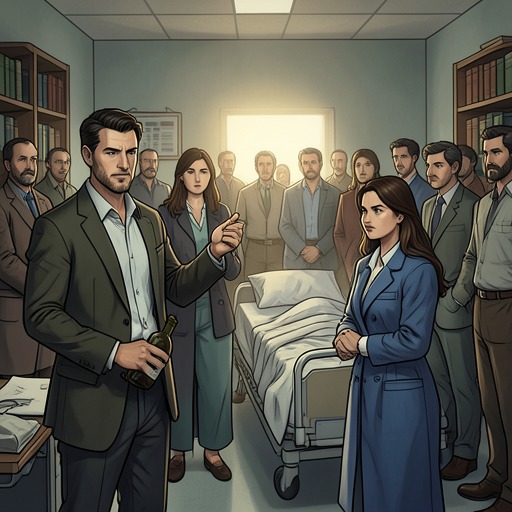
At the Dilli Home Hospital, a nurse found [David Brown](entity:character-recall-character-bec1bf761b68) lying on a bed beside Hilary Brown. The two brothers seemed to have returned together, although the nurse could not figure out how David could have entered the locked room; black soil on the floor suggested he had come from elsewhere
By October 31, 1988
The Last Tommyknockers
Survivors who had undergone transformation were detained by the government and subjected to research, but their altered bodies could not withstand the strain, plus the ship lost its energy, so most of them died. The last known survivor, Alice Kimball, died at [The Shop](entity:location-recall-location-the-shop-b679a37e7313) on [Halloween](entity:time-recall-time-halloween-c9b359236295). The novel's ending does